
Journal
Stories and reflections on wine, the people who make it, the places we gather, and the ideas that connect them. A journal of curiosity, discovery and the pleasures of the table.
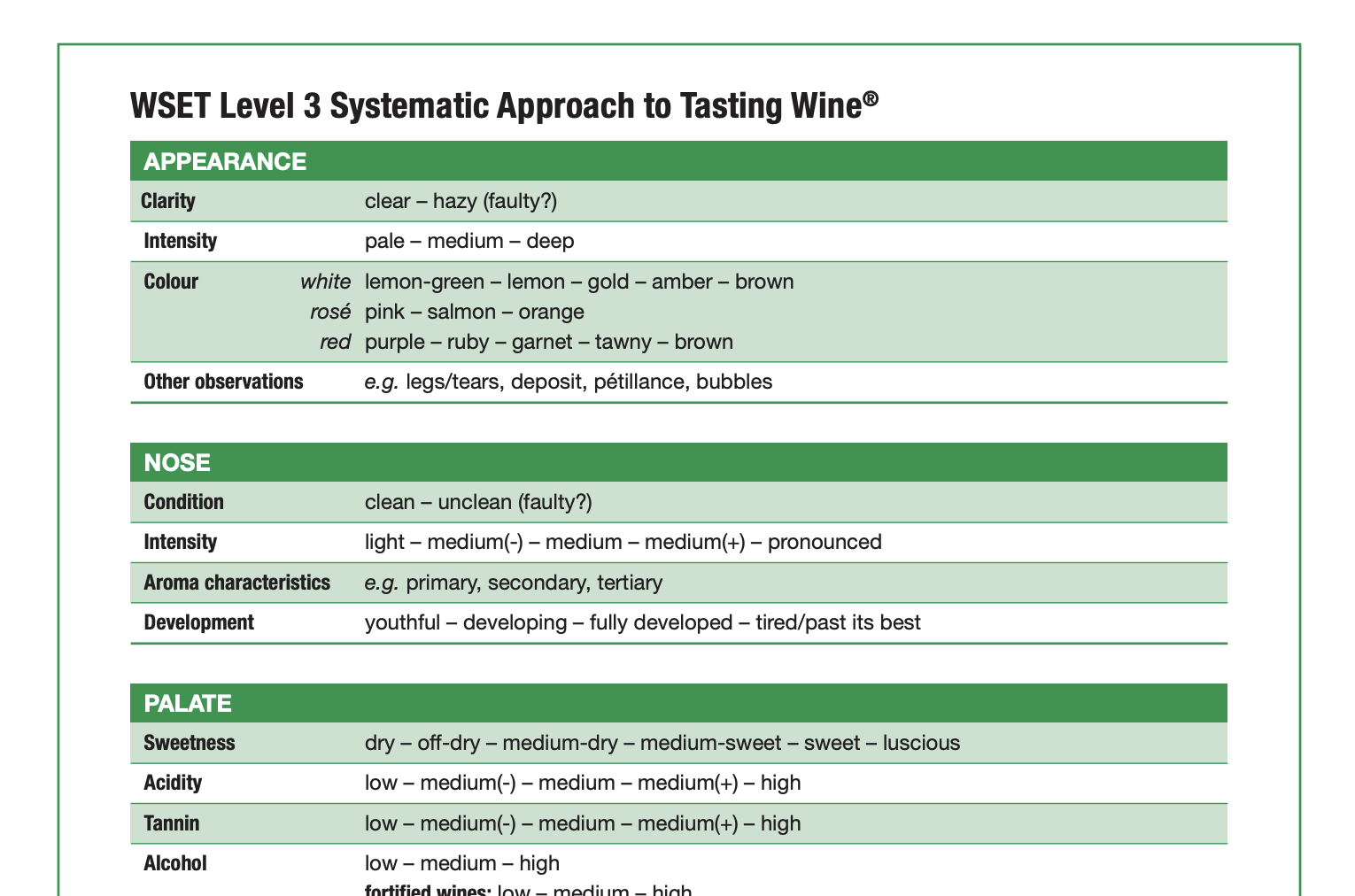
Tasting by Consensus: WSET Level 3 Reference Notes
Launching Reading Wine
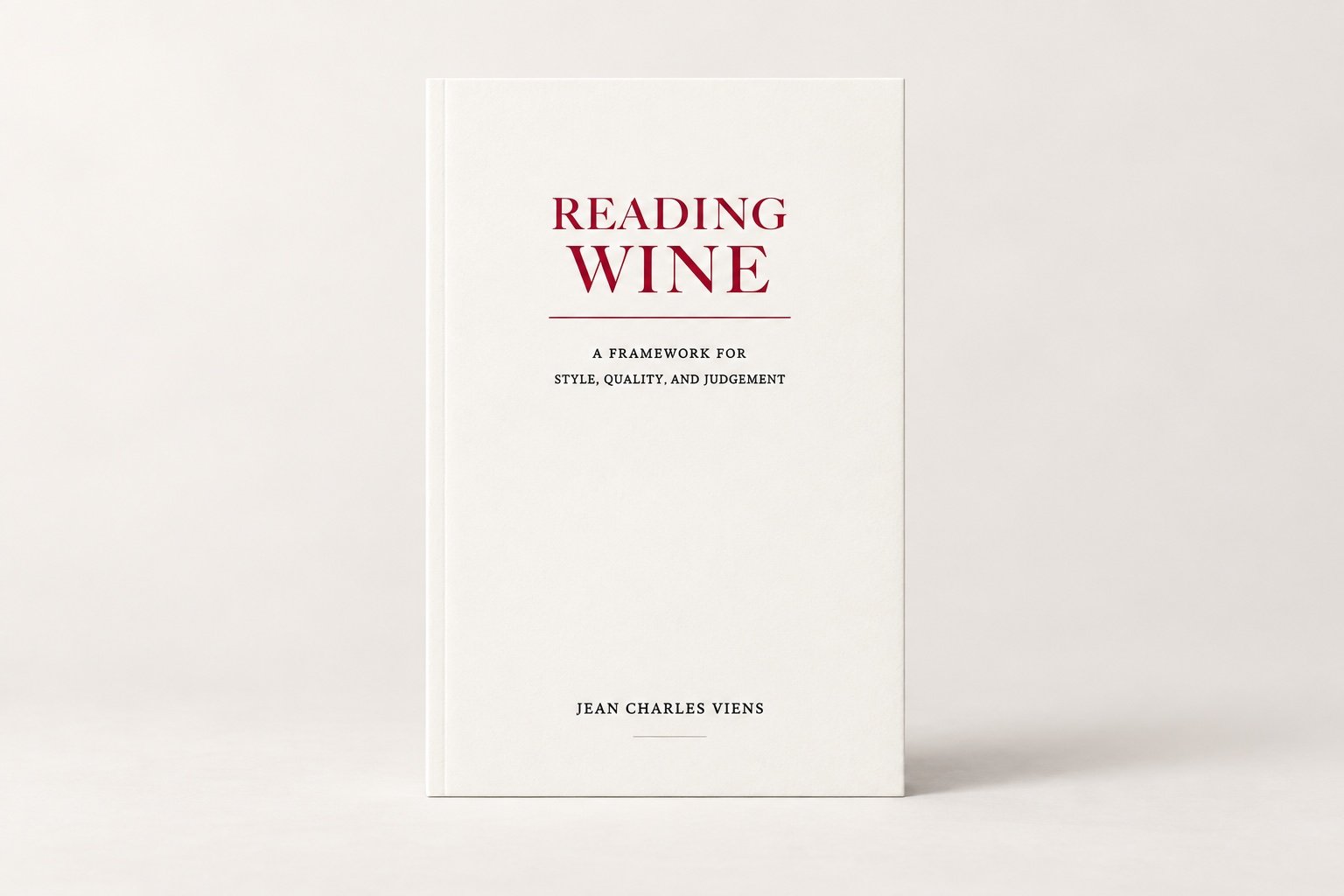
Knowing a wine and reading one are not the same thing. In Reading Wine, Jean Charles Viens offers a practical framework for understanding style and quality—for clearer judgement, fairer tasting and greater pleasure.
Practice (L3) makes perfect…
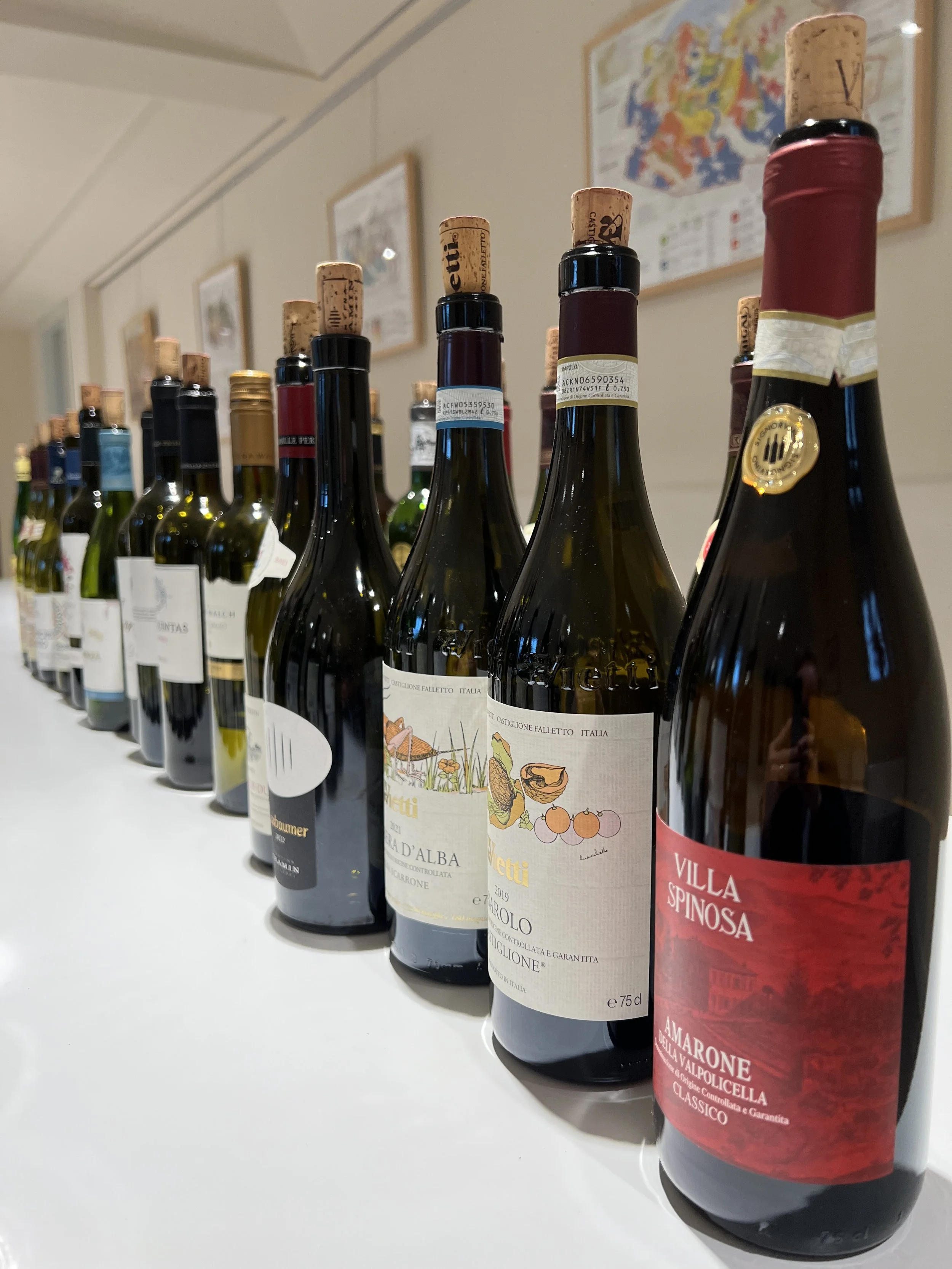
A good friend asked me for recommendations of wines to exercise for the practical exam of the WSET Level 3 Award in Wines. In this post, I propose an exercise.
Fundamental is to taste as per the Systematic Approach to Tasting, which was demonstrated using at least 70 wines during class time.
However, the critical point to pass with a high level is to be crystal clear with the skills required to demonstrate to the examiner.

Study Guides for Major Italian Wine Grapes
For study purposes, I created various MindMaps (dropbox folder) showing essential information for 175 Italian grape varieties. Click on an icon below to see my study notes...
These are based on the book by Ian d'Agata, Native Wines Grapes of Italy and reinforced with added information (organoleptic properties only) from Wine Grapes by Jancis Robinson, Julia Harding, and Jose Vouillamoz.

Sardinia, Italy's Best Kept Secret?
In this post, I publish my notes of a Webinar I presented to the members of the Wine Scholar Guild on Sardinia on 20 April 2022. You can join their membership here.
It was a fantastic opportunity for me to share my discoveries on a most fascinating territory. A place with a rich history and culture, another world altogether.
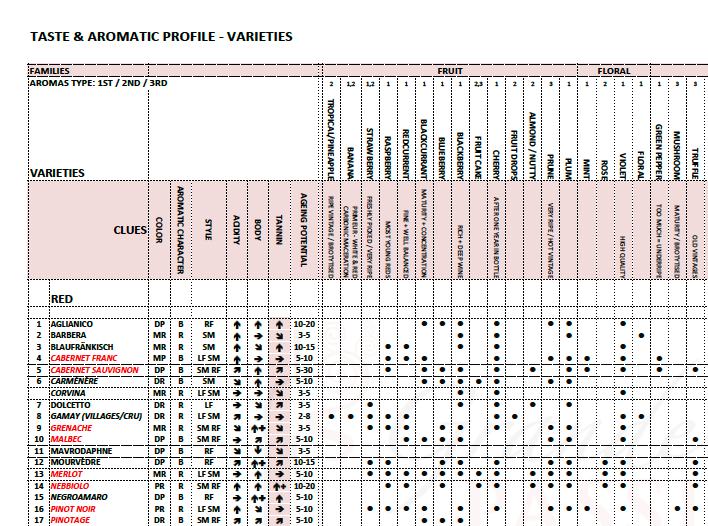
A most helpful Wine Grape Profile Table - fully revised & updated
An invaluable tasting assistant... in its 5th edition. It lists the major grape varieties and shows typical structural levels, aromatic categories, ageing potential, and possible aromas. A practical tool for WSET students to memorise and use alongside tastings to help imprint the distinctive character of each grape.

Taste Like a Pro, a Framework
This column is the last of twenty-three instalments which aim to shed light on the various factors that influence the style and quality of a wine. With this issue, I want to share my approach to tasting wine and hopefully embolden wine lovers and students, even those pursuing the Master of Wine title, to approach the task with confidence and a sure strategy.

Defining Style & Quality, a Framework…
In this post, I want to propose an approach, focusing on understanding and defining Style and Quality. A way of thinking that lays solid foundations upon which to rest the building blocks of wine knowledge and help to connect the dots more effectively when tackling a deductive tasting exercise.

Fortified Wines, A Most Helpful Table
During our tasting of various sherries last week, it became clear quite quickly that knowledge of other fortified wines would be necessary to identify them promptly in a blind tasting. And so, I created a profile table (here) for fortified wines to help me study.
This table was created with the help of various source. In particular, the official websites of sherry and port. Invaluable was The Sotheby's Wine Encyclopedia by Tom Stevenson as was The Oxford Companion To Wine by Jancis Robinson.
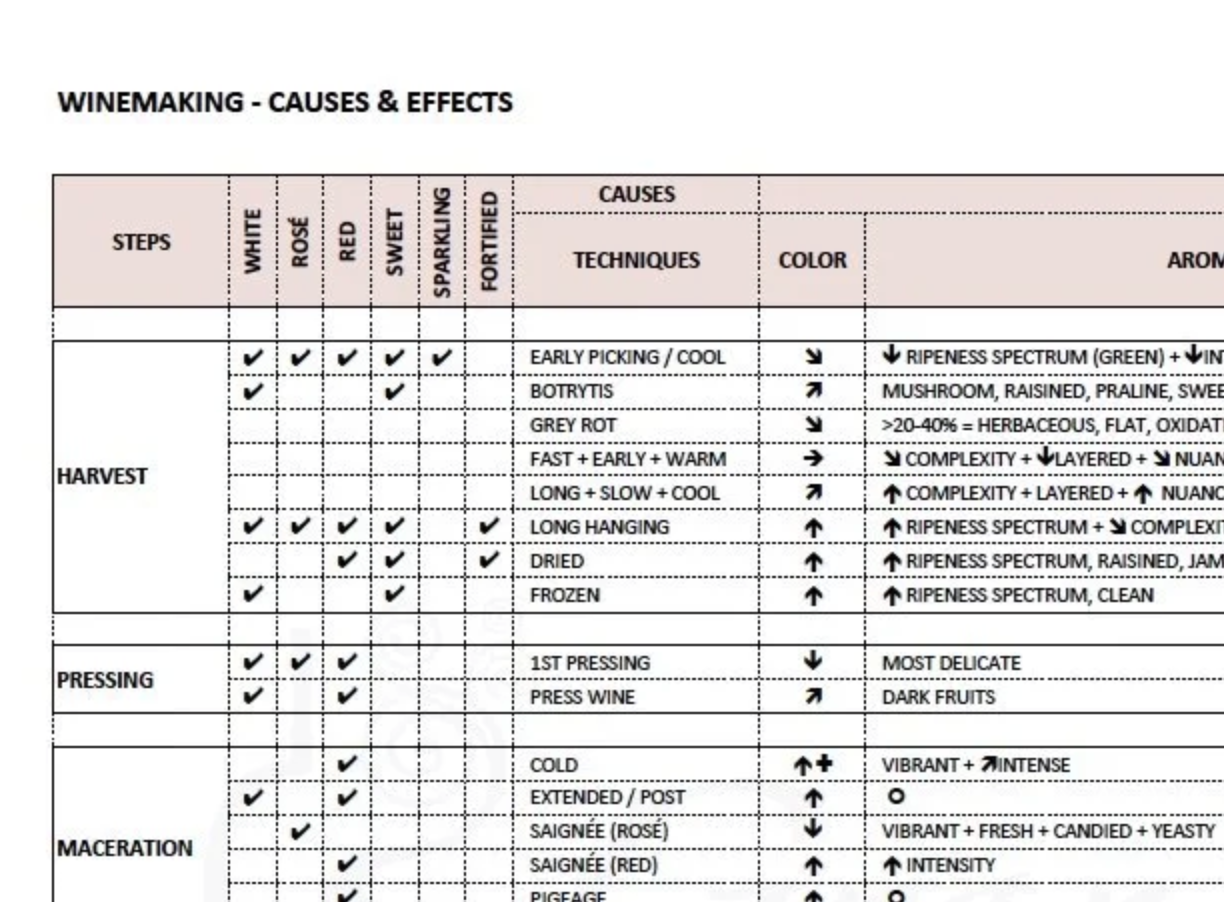
Winemaking & Style, a Table on its Causes & Effects…
In a deductive tasting exercise, winemaking techniques can yield helpful, sometimes essential, clues to identify the origin of a wine, even its quality status in the hierarchy of an Appellation.
Here is a helpful table outlining the effects of these techniques on style and quality. To be used alongside the tasting notes, of course…