How do you judge a wine you have never tasted before?
Some years ago I sat on a panel at an Italian wine competition, and the flight that arrived was unlike anything we knew.
Unfamiliar grapes. Modest appellations. Corners of the country none of us covered.
A quiet anxiety went round the table. How could we score these fairly, with nothing to compare them to?
Then we began to taste, and the worry faded glass by glass.
One wine had more layers than its neighbours. Another held its shape under its alcohol, where the next one warmed and thinned. One had finer tannins. One had a finish that kept speaking after the others had gone quiet.
We needed no memory of identical wines. We needed four questions.
Is it complex, showing more each time you return?
Is it balanced, with nothing sticking out?
Is it harmonious, its parts working as one?
Is it long, still present after you swallow?
None of them asks whether a wine is big, famous or expensive. You can put them to a modest white or a first growth, or to a grape you met five minutes ago.
Something else happened at that table. Two judges disagreed about a wine. One found it balanced; the other found the alcohol standing apart from the fruit. They tasted again, found the moment where it warmed, and one of them changed his mind.
Preference is a report. Quality is a claim, and a claim can be tested.
Next time a wine impresses you, ask the four questions before you decide. Impressive and accomplished are often two different things.
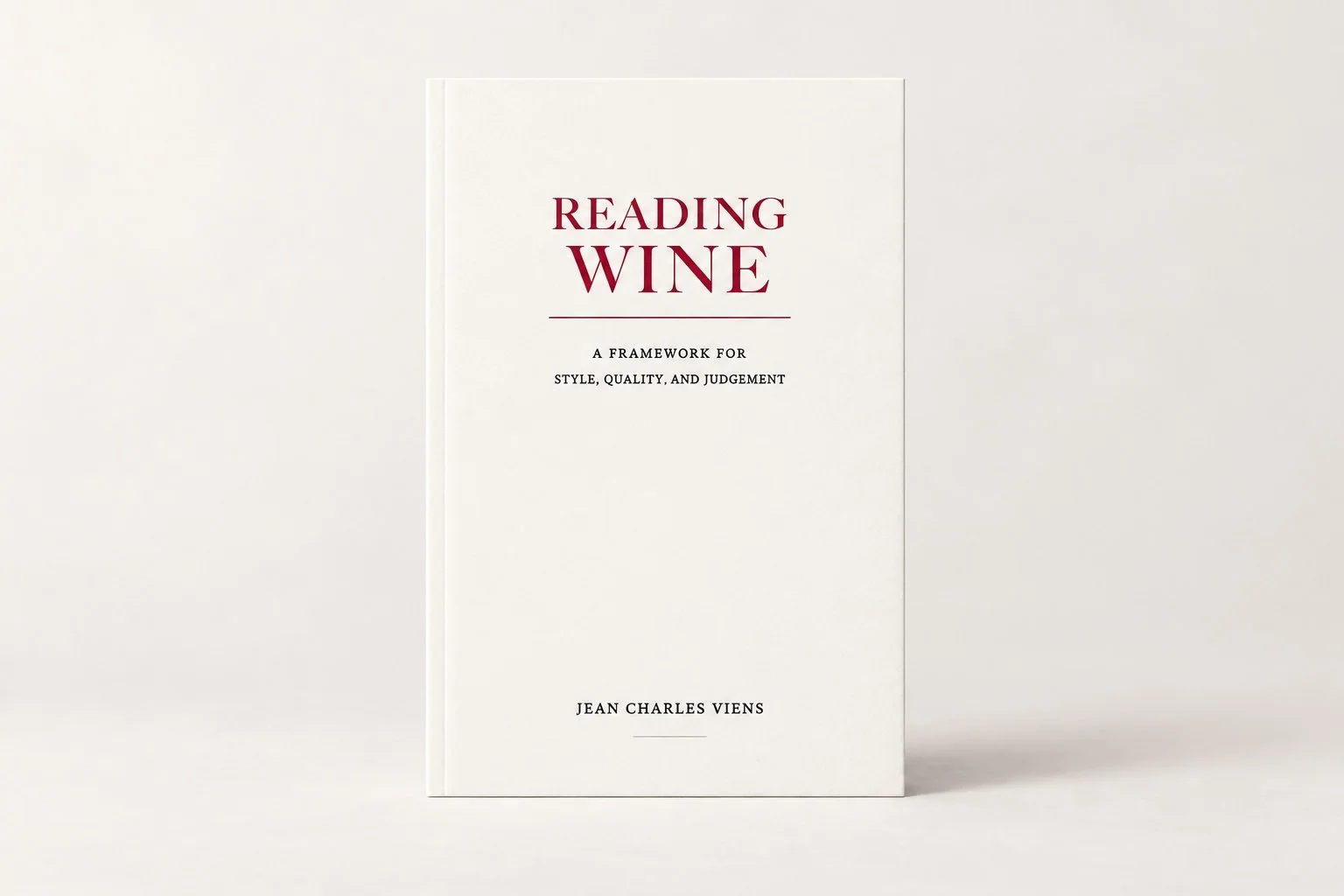
Those four questions sit at the centre of my book, Reading Wine.