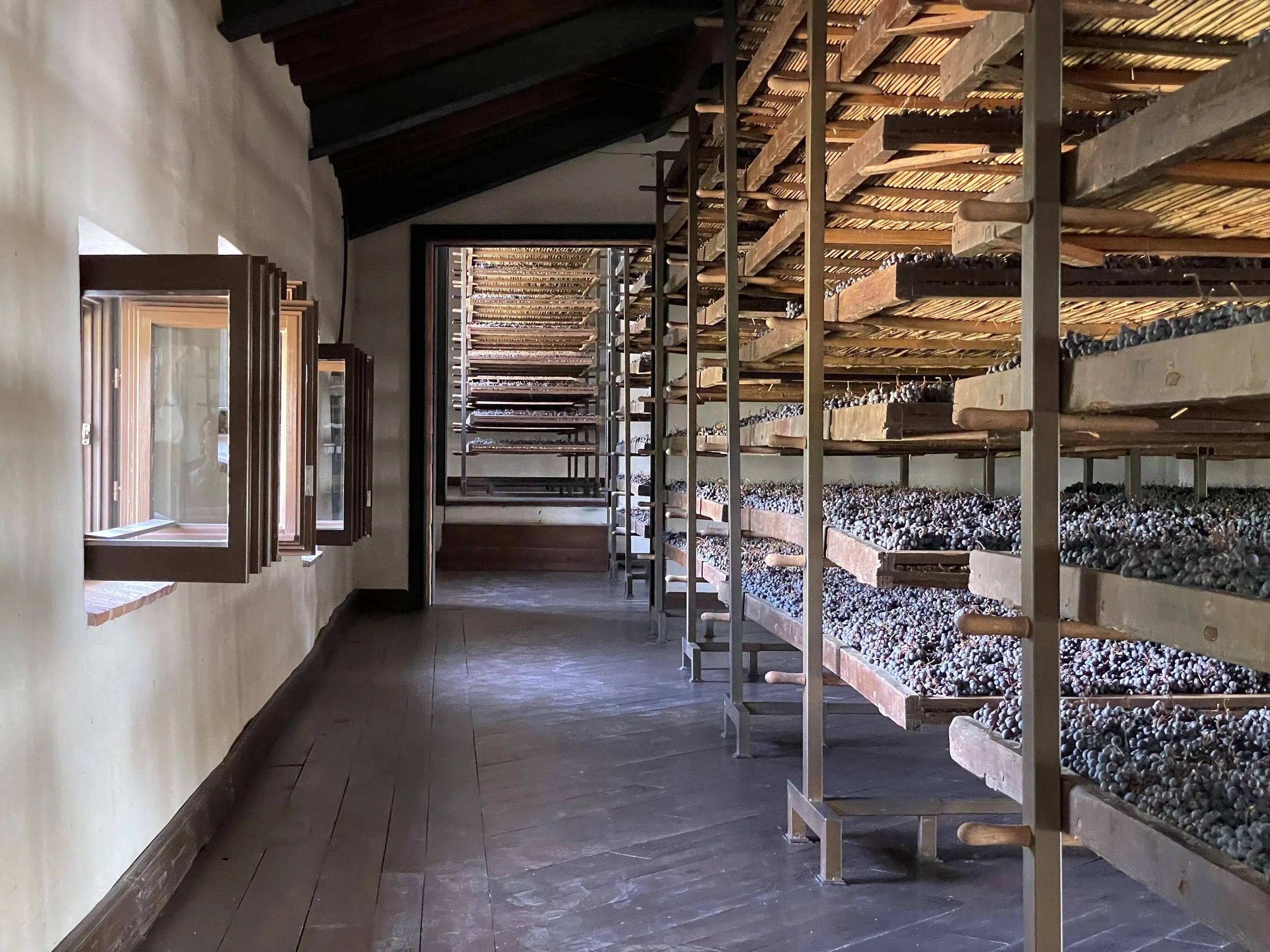
Walk into a fruttaio in October and the first thing you notice is the air. It moves. The rooms sit high, often under the roof, with windows set to catch the wind from the hills. On long racks the best grapes of the harvest lie in a single layer, waiting.
Valpolicella has dried its grapes for a very long time. In the sixth century, Cassiodorus described a wine made here from grapes left to rest after picking. Local families never really called it a technique. They spoke of laying the grapes to rest, and that phrase is now at the centre of a candidacy for UNESCO's list of the Intangible Cultural Heritage of Humanity.
The wording of the candidacy changed as it was written. It began as "the technique of appassimento", became "the technique of laying the grapes to rest", and in 2025 became "the rite of laying the grapes to rest". Each version came closer to what the growers recognise as theirs. In March 2026 the Italian National Commission for UNESCO selected it as Italy's nomination.
The rite rests on a landscape and a shared past. The racks, called arele, are light trays of wood and cane built to let air pass around everything they hold. For centuries the same racks served two seasons. In spring, families raised silkworms on them, feeding the worms mulberry leaves gathered from trees along the field edges, while Verona grew into one of the great silk centres of the Venetian mainland. In autumn, after the cocoons were sold, the racks and the airy upper rooms took in the best grapes of the harvest. Silk did not invent the drying of grapes, which is far older. It gave the practice its furniture and its rooms, and a habit of care for slow, fragile things.
The rite also rests on judgment. Choosing the grapes means finding loose bunches with sound, thick skins and a balance of ripeness and acidity that can survive three months of slow change. Watching over them means reading each autumn as it comes. Humidity, fog and temperature during the rest shape the wine as much as the summer in the vineyard. Modern ventilation helps, but nature still sets the terms. In this sense every Amarone has two vintages: one from the vineyard and one from the fruttaio.
What is handed down here goes deeper than a method. It is saper fare, a savoir-faire learned by watching, doing and being corrected over years. In Valpolicella, saper fare has become fare sapere: knowing how has become the way a community makes itself known.
The candidacy does not seek to protect a production process or a market. It asks that a way of working with time, place and one another be recognised and passed on. Every bottle of Amarone carries that inheritance. Learning to hear it changes how the wine tastes.
Sources:
ANSA: L'Italia candida a patrimonio Unesco le uve della Valpolicella
Consorzio Valpolicella, Cronostoria percorso di candidatura UNESCO