The forest beneath the vines: A once-feared lakeside wilderness now yields whites worth waiting for
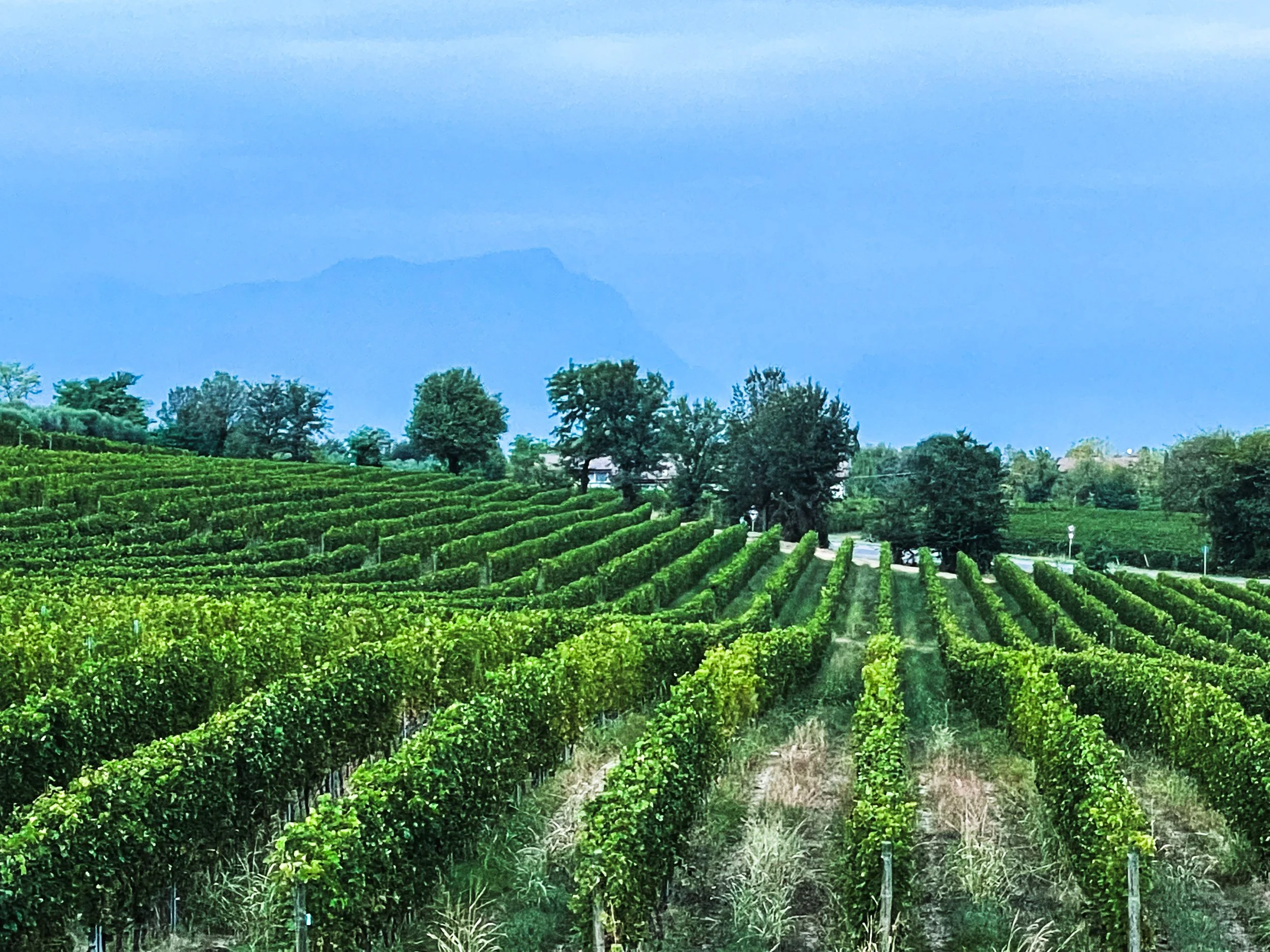
Lugana began as a place that frightened mapmakers. Its name is usually traced to lucus, the Latin for a sacred wood, and for centuries the Selva Lugana was a dense, marshy forest on the southern shore of Lake Garda, a territory travellers crossed with caution and chroniclers described as wild. Before it was a wine, Lugana was a blank space on the edge of the known, bordered by Roman Sirmione, where Catullus kept his villa, and by the fortress of Peschiera. The early maps drew it as an obstacle, a stretch of damp ground between the lake and the plain.
The land was drained and cleared slowly, and as the forest gave way to vines, the dense white clay left behind became the foundation of a new identity. When Lugana received its DOC in 1967, the first in Lombardy, the boundary drawn around it ignored an older one, running straight across the border between Lombardy and the Veneto, from Desenzano to Peschiera del Garda. Here the wine map describes a shared lakeshore culture more faithfully than the administrative map does, and it reminds us that people who farm the same soil often see their world differently from those who govern it.
The conversation has continued in the naming of the grape itself. Long called Trebbiano di Lugana, it is now known as Turbiana, a change that asserts local identity by separating it from a family name associated with volume and neutrality. DNA research has shown its close kinship with Verdicchio, placing Lugana on a larger map that links Garda to the Marche, yet the Consorzio and its producers, Le Morette foremost among them, are building a strong case that Turbiana is a child of this shore. Meanwhile the growing range of styles, from young wines to Riserva and late harvest, records producers' wish to show depth as well as freshness. From sacred wood to cross-border appellation to a grape with its own name, each map of Lugana has reflected what its makers feared, valued or hoped for.
In the glass, a young Lugana is all brightness: lemon peel, white peach, a touch of almond and a cool, sapid freshness that makes you reach for a second sip. It is happiest beside a plate of lake fish or a simple risotto, on a terrace if you can find one.
I have now prepared three masterclasses on Lugana, and each time the research has turned up something I did not know. What stays with me most is time. Give a good Lugana Riserva ten years in bottle and the forest seems to return to it, in the depth and the quiet savouriness it gains, and it can stand beside the finest white wines anywhere. Few people know this yet, which makes Lugana one of Italy's best-kept secrets.