The Italian Dream: A long lunch in a garden, and the art of living behind Italy's closed doors
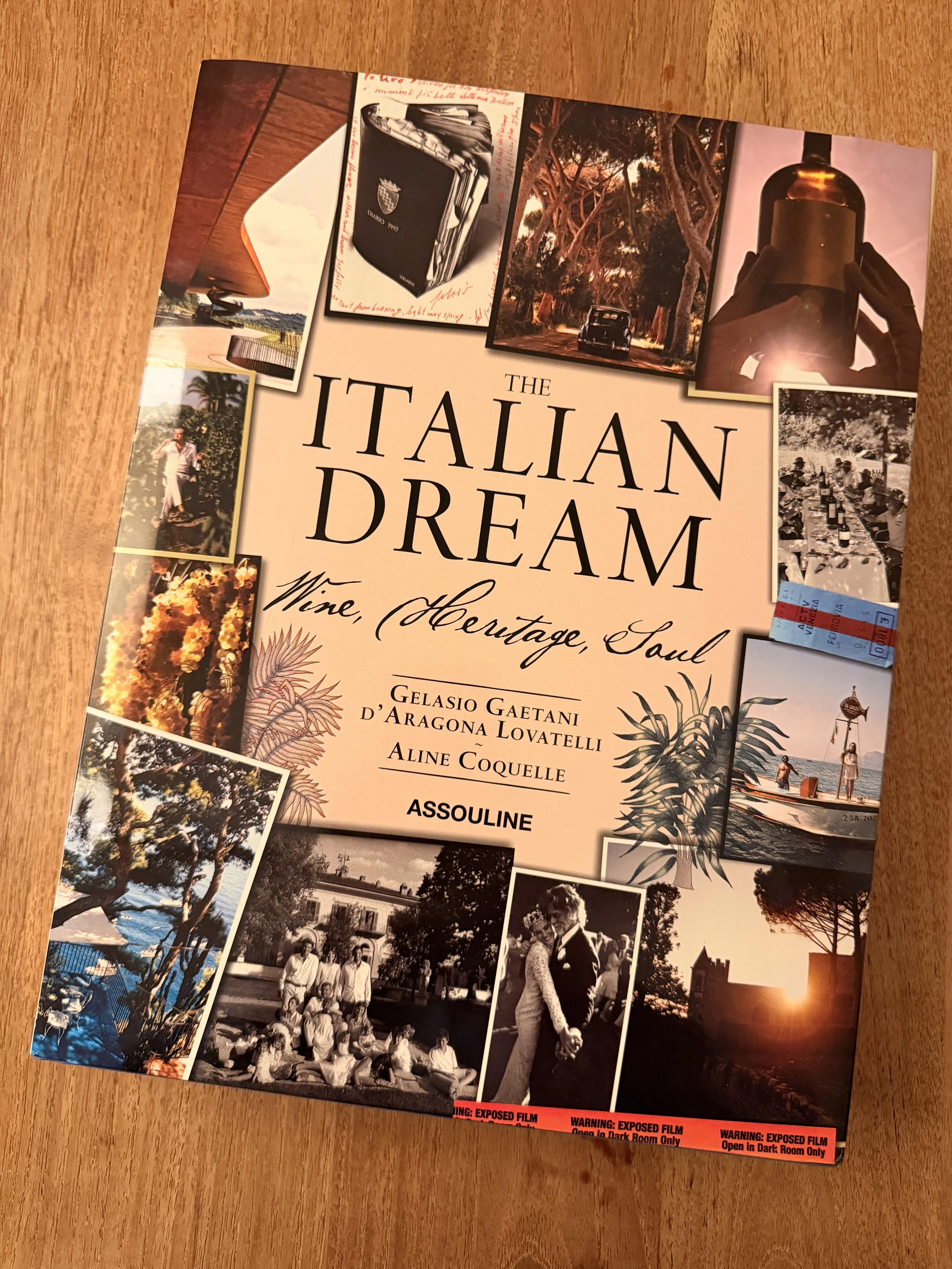
The first time I turned the pages of The Italian Dream, I had the reaction I imagine most foreigners have: I want to be in that book. Published by Assouline in 2016, it gathers more than three years of travel by Count Gelasio Gaetani d'Aragona Lovatelli and the French photographer Aline Coquelle, from the Alpine foothills through Tuscany to Rome and the southern coasts. Vineyards, castles, family houses, boats, kitchens and cellars pass by as one continuous landscape, photographed on film with a warmth that feels like memory.
I met Gelasio once, over dinner at Venissa in the Venice lagoon, some six years ago. I had known of him long before, and had seen him at events across Italy, an eccentric in the most fascinating sense. He was economical with his words, yet each one seemed chosen to set a scene, and he was clearly looking for substance in our conversation. I left feeling we had made a real connection, and I recognise the same sensibility in the book: a creative, slightly unconventional way of seeing wine as one part of a whole way of life.
The photograph I keep returning to is a long lunch in a garden, and it appears on the cover too. A table runs under the trees, crowded with bottles and plates, the guests in hats and shirtsleeves leaning towards one another. I can almost hear it: the boisterous conversation, the wines opened one after another, Mediterranean dishes arriving long after anyone is hungry. It captures the companionship that Italians really know how to create around a table.
This is an exclusive Italy, the one many foreigners imagine to be everyday Italy. It belongs to noble families and old estates, to houses that have quietly preserved an art of living for generations. Living in Verona, I know it still exists. The city has many such places, though they sit behind closed doors and are spoken of in hushed tones. The book opens a few of those doors, and that is its gift.
It reminds me of an old Ralph Lauren catalogue in which Lauren set out to capture the British art of living, writing of "an appreciation of what has come before" and of a life measured by its depth. Those words could describe this book just as well, and I suspect Lauren would have found endless inspiration among Italy's noble families. I will be giving copies to friends in Canada, because it illustrates their dream of Italy so beautifully. It is a dream, of course. But it is worth looking for, because it does exist.