In December 2017, I sat down to write the last instalment of a column called Taste like a Pro, for the wine magazine Spirito di Vino Asia.
There had been twenty-three of them. Each looked at a single factor that shapes a wine: a grape, a climate, a cellar decision. Useful, I hoped. But separate.
For the last one, I wanted to show how the pieces fit together. How I actually taste.
Writing it, I found that the order mattered more than anything.
Begin with style. Before asking whether a wine is good, describe what it is: its weight, structure, texture, aromas, the marks the cellar left on it. Only when a wine’s personality is clear can you judge its quality with any authority.
Then quality, with its own questions: complexity, balance, harmony, length.
Then, behind both, the causes: the grape, the conditions it ripened in, and the people who made it.
One sentence from that column has stayed with me ever since. Quality is a measure; style is a definition.
It is why a Prosecco can be outstanding and a Champagne poor, and both judgements can be fair.
I didn’t know then that I was writing the outline of a book. It took years of teaching, judging and tasting to fill it in, and to see that its real use lay well beyond the exam room. It gives people confidence: the right to trust what they taste, and the words to say why.
If you take one thing from these first posts, take the order. What is this wine like? How good is it? Why is it like this?
Ask them in that sequence, and wine becomes far easier to read.
That is the book I eventually wrote. It is called Reading Wine.
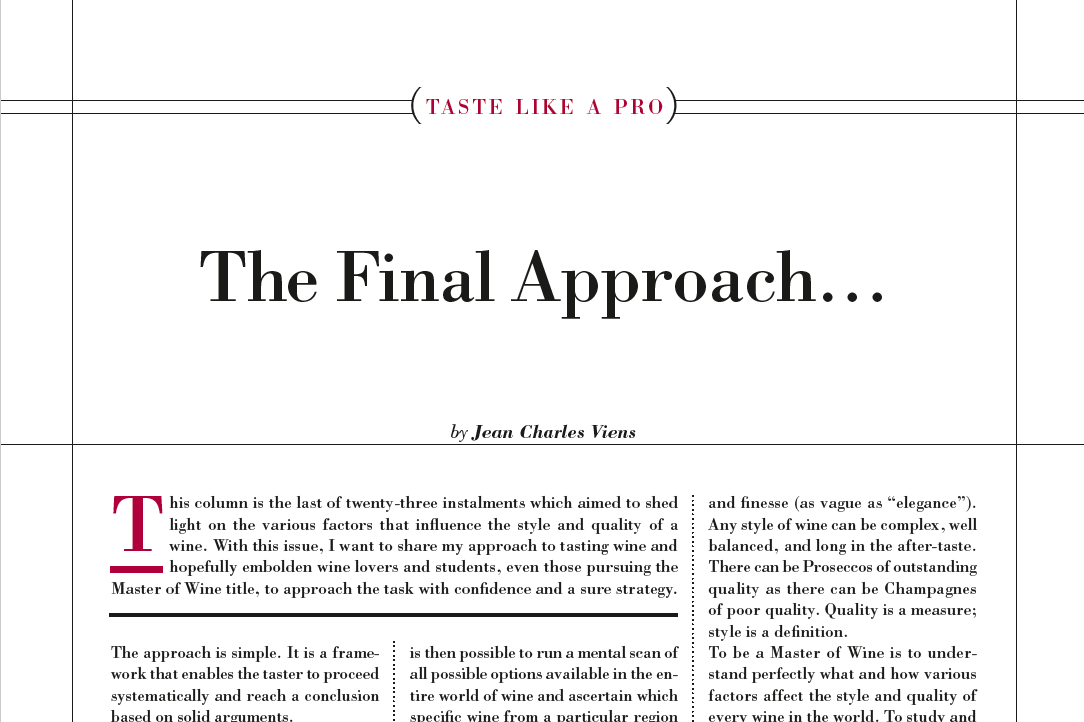
Screenshot from Spirito diVino Asia