There is a moment that happens sometimes when I visit a winemaker. The conversation moves from the wine to the person behind it: what drives them, what worries them, what they are still trying to understand.
I call it the clic.
It happened with Marco Speri in Valpolicella. I had planned two hours. We stayed four, and neither of us noticed.
We began in the cellar, tasting from several casks. New wine, not yet blended. Each cask spoke entirely for itself. Fruit bright and insistent. Tannin firm and a little raw. Acidity sharp, standing to one side. Everything was there. Nothing was listening to anything else.
Then we went up to the tasting room, and Marco opened an Amarone from a vintage ten years earlier.
The same kinds of elements were there, but they had stopped competing. The fruit carried the tannin. The acidity lifted the whole. Each part supported the others, and together they took the wine somewhere none of them could have reached alone.
That is harmony, and it is different from balance.
Balance is proportion: the parts are present in the right amounts. Harmony is integration: the parts belong to one another. A young wine can be well balanced and still feel disjointed. Blending and time turn proportion into a single voice. Nothing is added. Something arrives.
So when a young wine feels awkward, with tannin here and oak there, ask whether its parts are in proportion. If they are, it may only need time. If they aren’t, no cellar will rescue it.
And if you ever visit a winemaker, leave the afternoon open. The best conversations rarely keep to the schedule.
In Reading Wine, harmony is what lets a great wine seem simpler than it is.
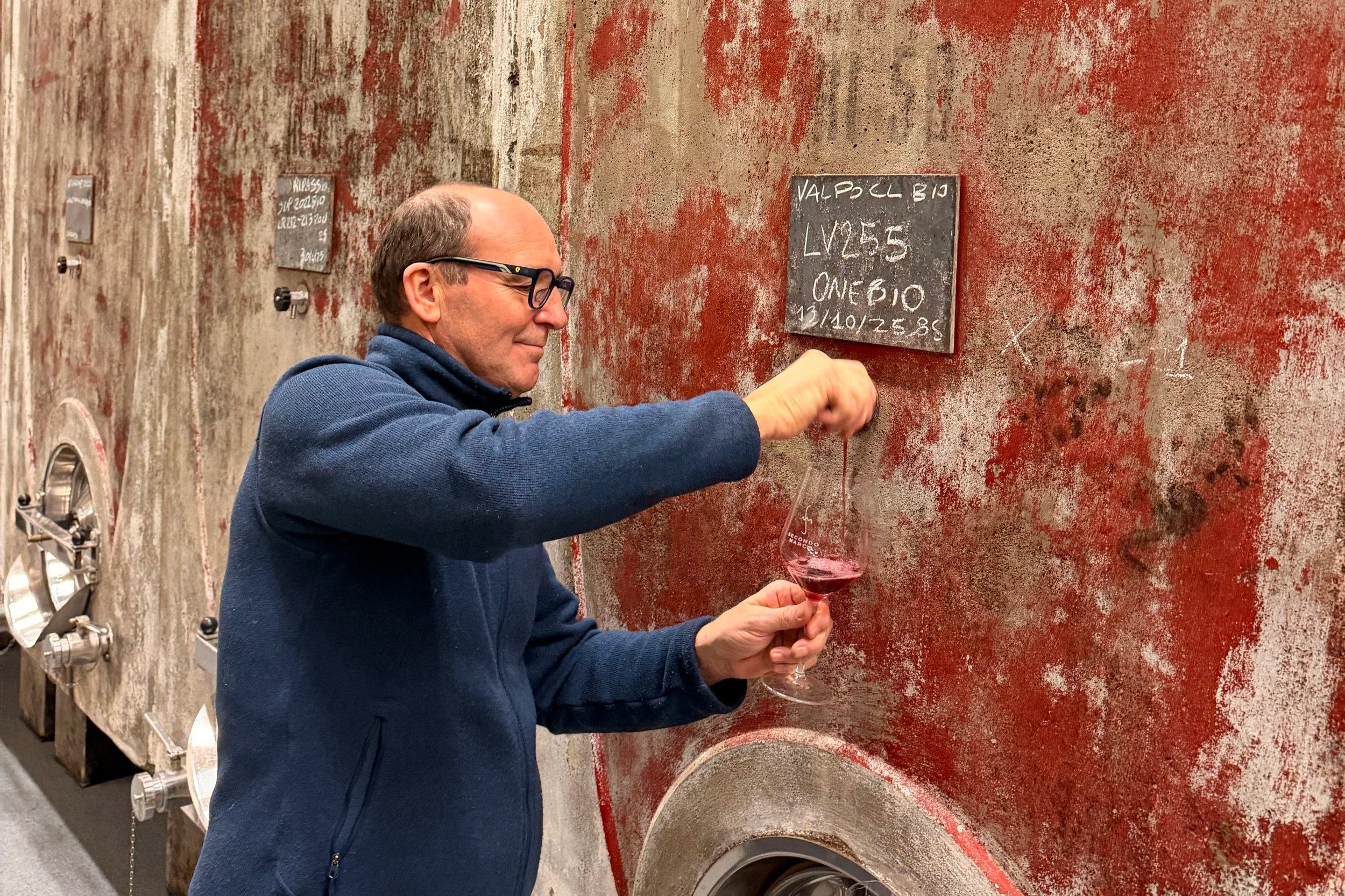
Photo by JC Viens