Penny finds it first. The white Lagotto stops on a slope of bare hazel, presses her nose to the leaf litter and starts to dig. The hunter eases her aside, kneels, and lifts the truffle out with a narrow spade. Then he fills the hole back in and pats the earth flat.
Maria and I had joined a small group for the hunt, and of everything that morning it is that last gesture I keep coming back to.
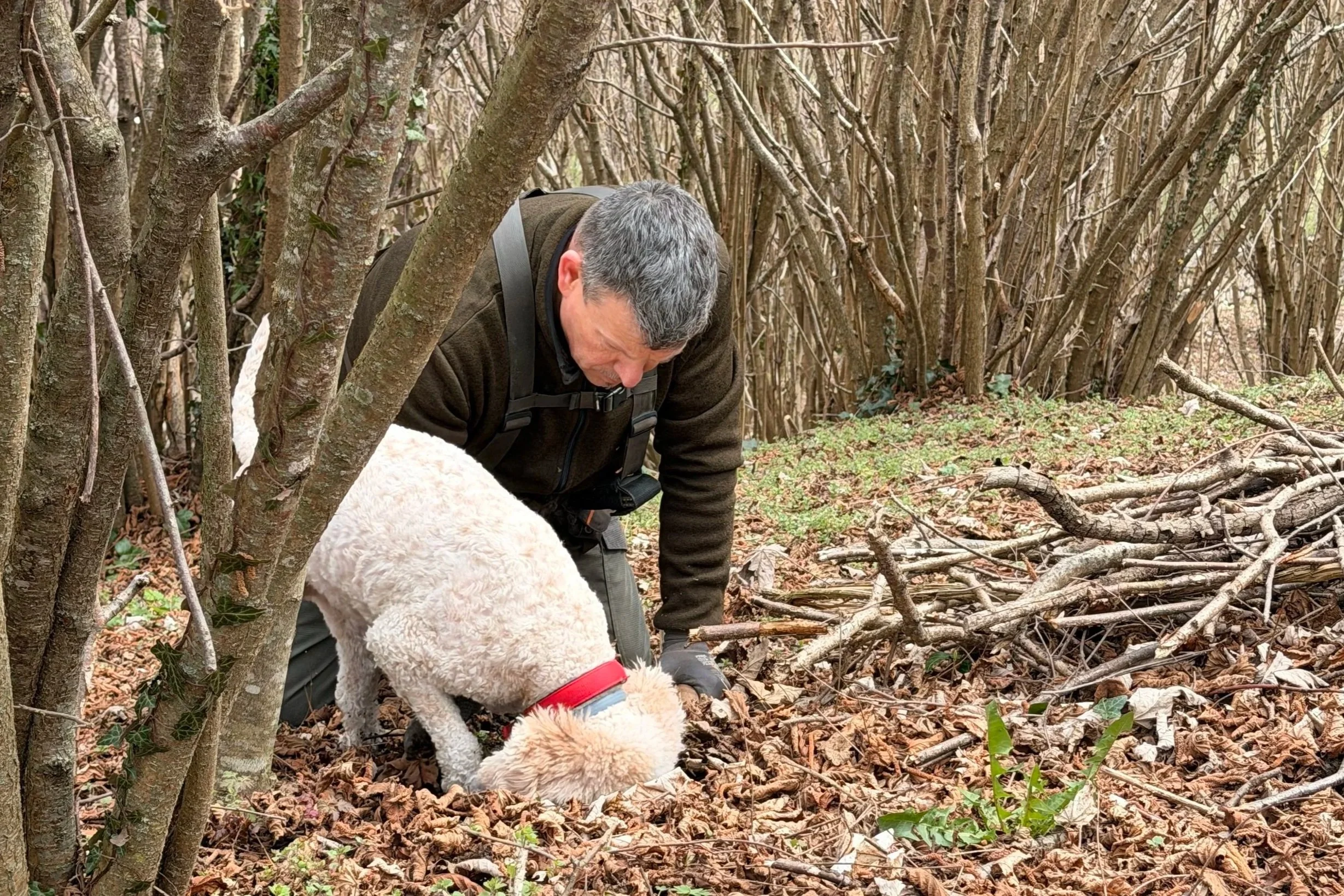
Photo by JC Viens
What lies underground
Ferrara di Monte Baldo takes its name from iron. The Romans worked the deposits here, and under the Scaligeri the village was spared taxes because of its mines. An anvil still sits on its coat of arms. When the iron ran out, so did much of the reason to stay. Plague and war did the rest, and for decades the village emptied.
Yet the mountain never stopped giving. Monte Baldo has been called the Garden of Europe for its extraordinary range of plants, many of them medicinal. In 1566 the Veronese apothecary Francesco Calzolari climbed it to gather herbs for his remedies and wrote an account of the journey. A museum of biodiversity bearing his name now stands a few kilometres above the village.
The truffle belongs to that same generosity, with one difference. Iron, once taken, is gone. A truffle comes back only if the forest around it is kept well.
The truffle’s bargain
A truffle gives off its scent only when it is ripe, and it does so on purpose: it needs an animal to dig it up and scatter its spores. Penny is part of that bargain. She digs only where a truffle is ready, which is why a trained dog is the honest way to hunt and a rake is not. When the hunter refills the hole, he is completing what the truffle began.
The hunt is run by the Associazione Tartufai Etici, the village’s association of ethical truffle hunters. It starts indoors with a short introduction, then moves into the woods or a controlled truffle ground for about two hours. Because Monte Baldo has several kinds of truffle, the season runs almost all year. The only pause comes when the soil freezes. Snow alone does not stop a good dog; if the ground beneath is still soft, she can smell a truffle straight through it.
A living from the woods
Lately something has shifted. Between 2019 and 2026 Ferrara grew from 273 residents to 302, part of a wider return to the Veronese mountains. Encouraged by the trend, the mayor, Carla Giacomazzi, is pushing harder in the same direction. The aim goes further than a morning out for visitors: that people can once again earn a living here, by hunting, by cultivating, by selling and cooking what the forest gives.
The commune has granted forty hectares of communal woodland to the Associazione Tartufai Etici, to be planted and tended as controlled truffle grounds. The association trains new hunters and their dogs. Ferrara was the first village in the Veneto to join the national network of Città del Tartufo, and each July it hosts the Fiera del Tartufo Veneto, meant to gather the region’s hunters, researchers and producers in one place and to give the trade a centre on the mountain.
None of this works unless the woods stay healthy, and that is the quiet logic of the whole project. The forest is the asset. The people who take you hunting are the same people looking after it, and a morning with them helps pay for that care.
At the table
Afterwards, eat something simple. Truffle shaved over warm toasted bread, a little Monte Veronese, a glass of red from the Baldo slopes. A freshly found truffle has a quieter, rounder scent than anything sold as truffle oil, and it is at its best within six days of leaving the ground. One more reason to come up and eat it here.
Joining a hunt
Truffle Hunting on Monte Baldo, with the Associazione Tartufai Etici
Saturdays at 10:00, about two hours, in the woods around Ferrara di Monte Baldo. Small groups, throughout the truffle season.
Booking: +39 335 142 0322 or tartufaietici@gmail.com
Wear boots with grip. The slopes are steep, and the leaves are slippery.
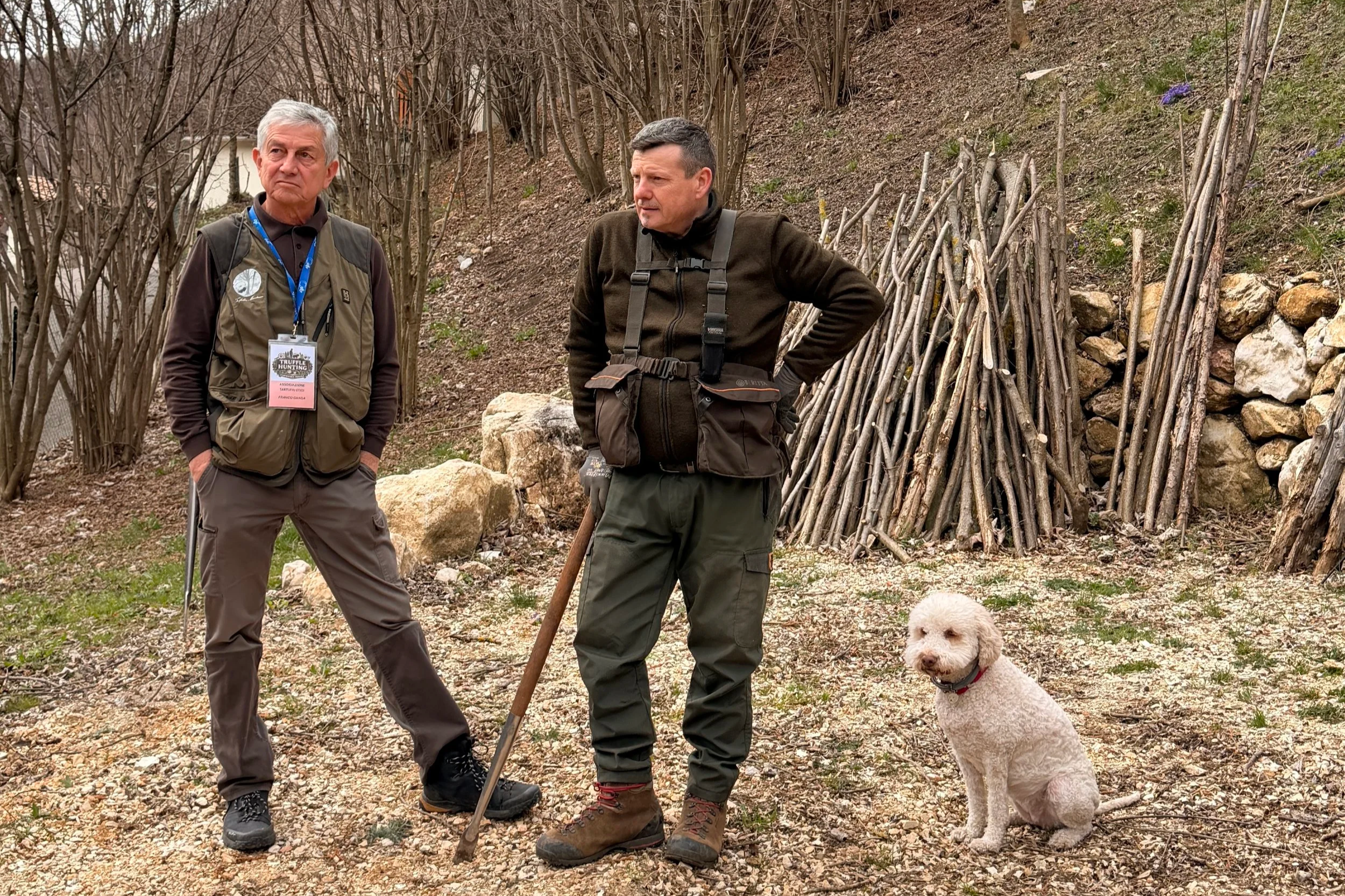
Photo by JC Viens